
Forensic document examination, engineered for evidence
TrueDocX carries a questioned-document case from the moment an exhibit crosses the counter to the day an examiner testifies. Intake, custody, examination, review, reporting and release all write into one case file, one custody chain and one audit ledger, with cryptographic integrity sealed onto every file and every action.
Integrity by default
Every file is hashed with SHA-256 on arrival and re-verified on every access. Evidence lives under object-lock WORM retention that no administrator can shorten, new analysis creates parent-linked versions rather than edits, and every view, download and action writes an entry in a read-only audit ledger.
Six governed stages
Intake and registration against the requesting agency, with Q and K exhibit series and a receipt hash on every file. Custody and storage with explicit states and reason-coded transfers. Assignment by discipline with examiner workload in view. Examination on dedicated benches. Blind peer review. Report and release.
Five examiner workbenches
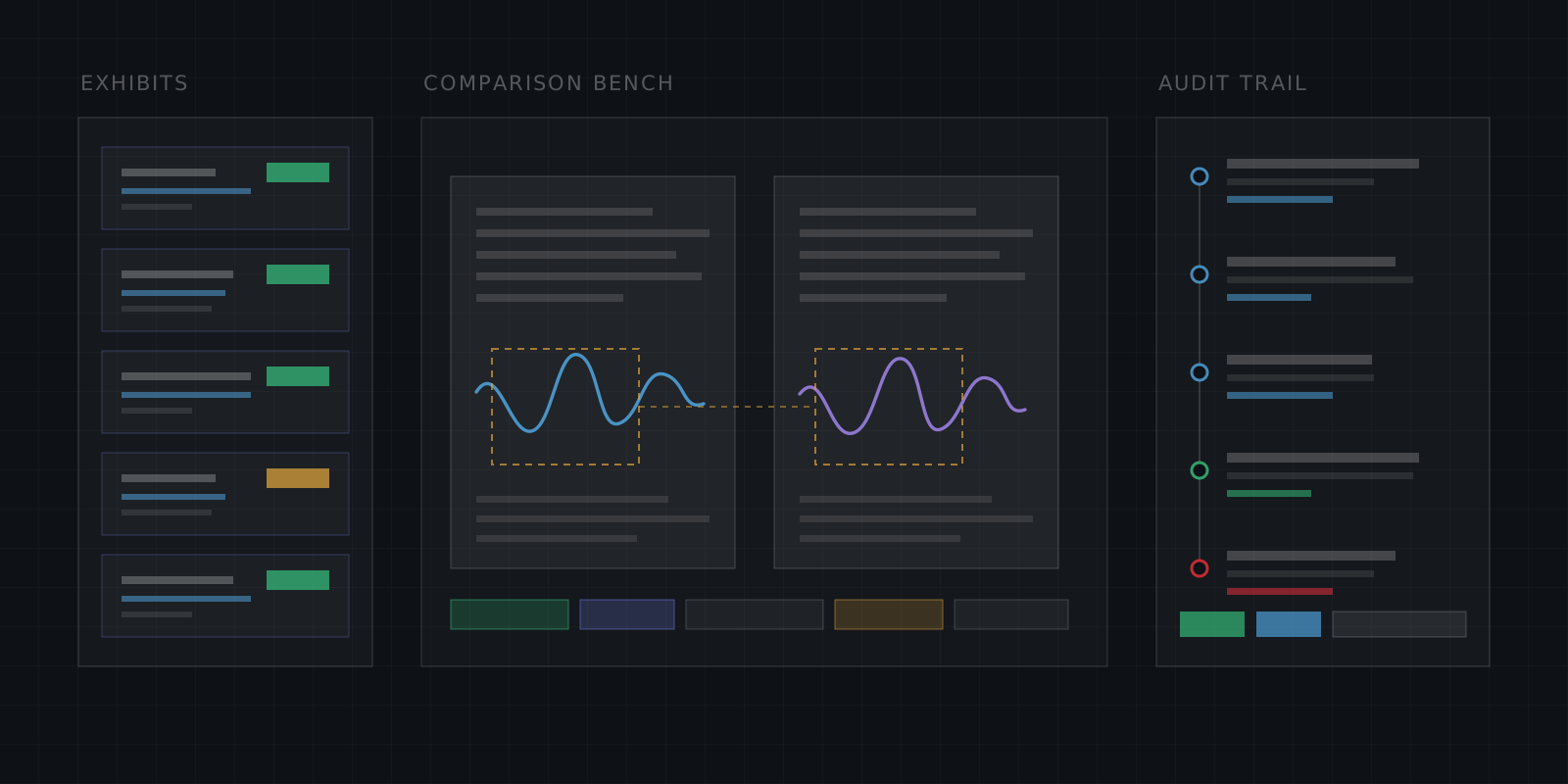
An imaging bench for multispectral capture, calibrated measurement and layered annotation. A comparison bench with linked pan-zoom, overlay and blink modes. A signature bench with exemplar management and calibrated likelihood-ratio methods. A handwriting bench with characteristic charts and writer corpora. A digital-documents bench for PDF metadata, incremental updates, revision history and signature validation.
Blind, graded review
A second examiner reviews blind, with case identity masked and first conclusions withheld until submission. Validation-grade and reliability-grade badges follow every method and result into the report, sequential unmasking holds contextual information back until the workflow permits it, and disagreements route to structured conflict resolution that blocks release until closed.
Court-ready output
The report builder compiles graded conclusions, figures with microcaptions and method disclosures into the laboratory template. Redaction re-typesets the page so the pixels underneath never ship, Bates numbering is applied, and release is gated, versioned and hash-stamped with the full document trail available for discovery.
Methods governed like evidence
Analytical methods ship as versioned releases with published release notes, run inside the tenant under a local-compute-only policy, and produce a hash-stamped manifest of inputs, parameters, outputs and versions so any result can be reproduced.
Inside your own perimeter
TrueDocX installs on laboratory infrastructure and is air-gap friendly, with an isolated database schema and object-store scope per laboratory. Identity comes from your own directory over OpenID Connect or SAML with MFA enforced, storage is S3-compatible with object-lock enabled at bootstrap, and audit, custody and review exports are mapped to ISO/IEC 17025 documentation needs.