

Where we focus our science.
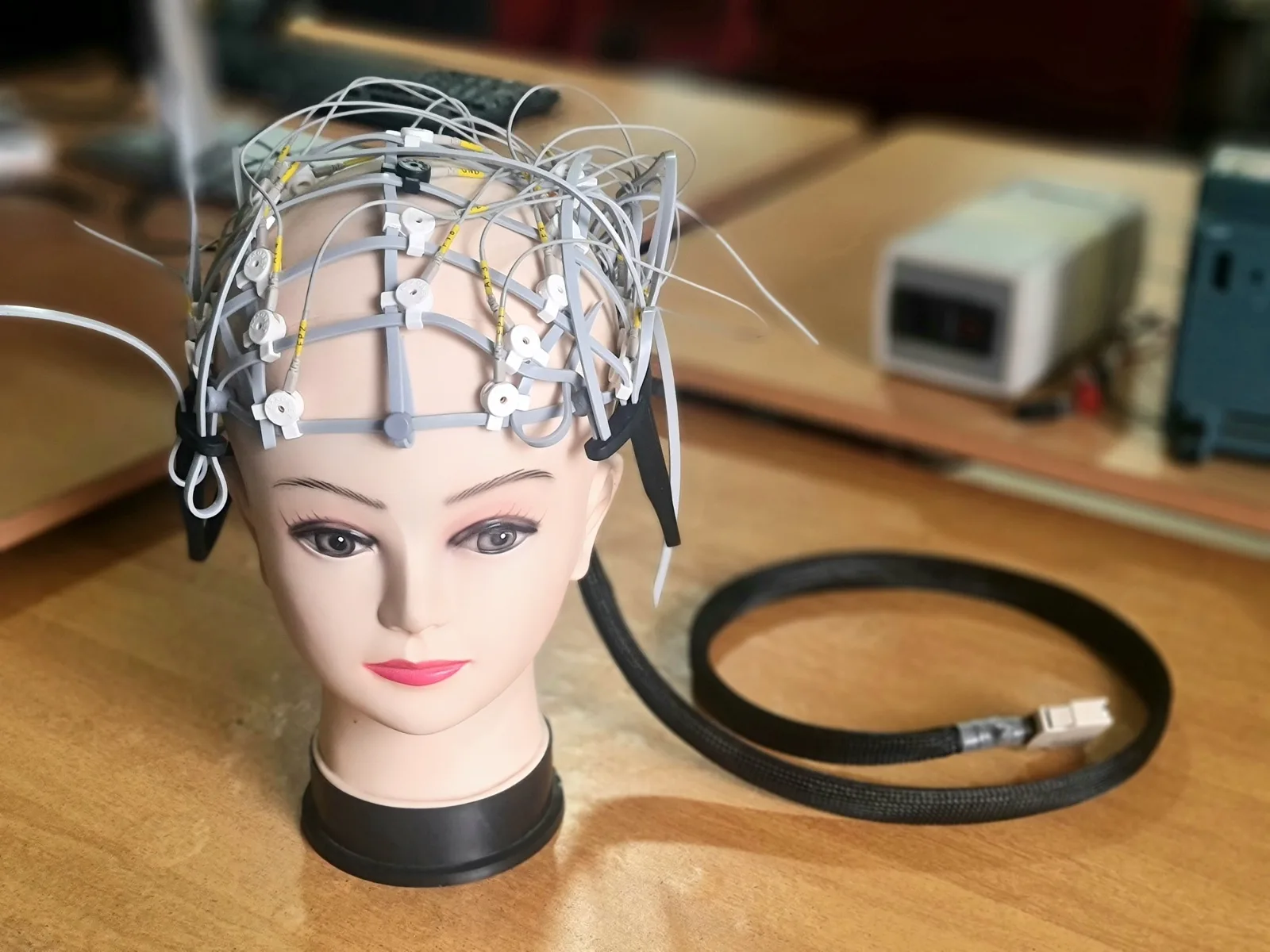
EEG & Event-Related Potentials
Acquisition and analysis of brain electrical activity and ERPs across cognitive paradigms.
Neurofeedback
Closed-loop training protocols for cognitive enhancement and rehabilitation.
Polysomnography
Multi-parameter sleep studies and automated multimodal sleep scoring.
Transcranial Electric Stimulation
tES research integrated with simultaneous EEG monitoring.
Neurocognitive Software
Development and standardisation of BESS and Brain Function Therapy modules.
EEG-based Neurorehabilitation
Applying EEG technologies to neuro-rehabilitation and therapeutic practice.
Forensic Remembrance Detection
Advancing forensic research through EEG-based, remembrance-based detection.
Neuromodulation & ABR
Neuromodulation systems and auditory brainstem response research.
Cyber Security
Applied security research: threat modelling, vulnerability analysis and resilient architectures for critical systems.
Red / Blue / Purple Teaming
Adversarial simulation, detection engineering and collaborative purple-team exercises that harden defensive posture.
Digital Forensics
Evidence acquisition, artefact recovery and analysis across disk, memory, mobile and network sources, to court-admissible standards.
Electrophysiology
Fundamental study of bioelectric signals (EEG, ERP, EMG, evoked potentials) underpinning every device and paradigm we build.
Legal Tech
Technology for the justice system: case analytics, digital evidence management and decision-support tooling for legal workflows.
Forensic Radiology
Imaging-based forensic investigation: post-mortem CT/MRI interpretation, age estimation and injury reconstruction research.
Five disciplines, one lab.
A collaboration-focused model that brings together complementary expertise to resolve a growing national and global disease burden.
Knowledge Translation: science that became products.
Advanced lie-detection technology invented by Dr. C.R. Mukundan, deployed across forensic agencies.
The first computer-based cognitive retraining programme, applied in head injury, stroke and developmental disorders.
Axxonet's clinical-grade EEG/ERP acquisition and analysis platform: high-density amplifiers and paradigm software underpinning research and diagnostics.
Studies from the Axxonet Research Laboratory.
In good company.
Backed by national science bodies.
Epilepsy Detection Device
Development of an automated, portable EEG-based epilepsy detection device with NIMHANS, Bangalore.
Early Oral Cancer Screening
Early-prevention oral cancer screening project with international and national partners.
Medical Technology Grants
Competitive grants awarded for developing medical technologies and devices.
Clasp · Parkinson's Movement Sensing
Sensor-glove measurement of upper-limb movement in Parkinson's disease, with Leeds Beckett University and Calderdale & Huddersfield NHS Foundation Trust.
Translational research with Leeds Beckett University.
In November 2017, Leeds Beckett University (UK) and Axxonet Global signed a Memorandum of Understanding for joint research and development across physical and mental health, medical technologies, digital health, forensic sciences and cyber & digital security, including joint bids for research funding and delivery of distance learning.
Sensor-based movement measurement in Parkinson's disease.
Clasp, Axxonet's high-precision multi-sensory glove fitted with accelerometer and flexor sensors, is being applied by Dr Sareen Galbraith's team in the School of Health at Leeds Beckett, with Dr Walied Mowafi at Calderdale & Huddersfield NHS Foundation Trust, to develop sensitive, reproducible measurement of upper-limb movement in Parkinson's patients, complementing specialist neurological assessment.
First funded through the Translate medical-technologies partnership, the project was subsequently backed by Grow MedTech, a ~£10m programme led by the University of Leeds under Research England's Connecting Capability Fund, supporting clinical evaluation, regulatory approval and connection of the glove's sensors to a mobile app.